
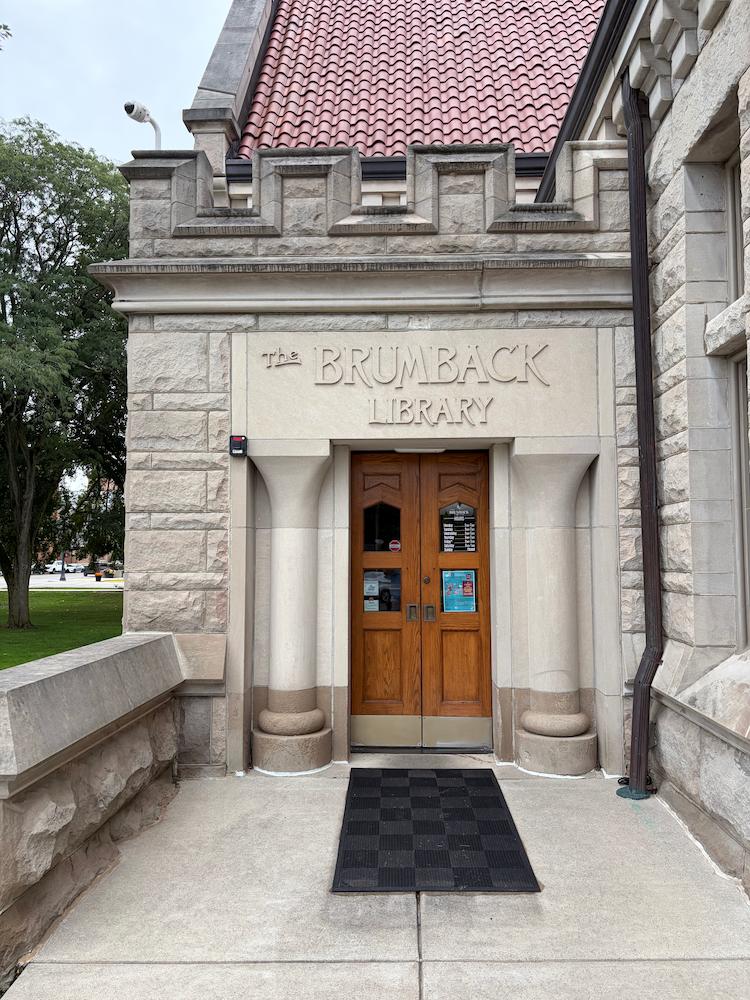
Preserving 125 years of history through specialized Italian marble floor restoration in Van Wert, Ohio.
Some buildings are more than brick, mortar, and stone. They are landmarks that connect generations, preserve community memories, and tell stories that deserve to be protected.
In Van Wert, Ohio, The Brumback Library is one of those extraordinary places.
Recognized as the first tax-supported county library in the United States, this architectural treasure has served its community since 1901. Its historic character, distinctive architecture, and longstanding cultural significance make it an important part of both Ohio and American library history.
When Midwest Floor Restore was selected to restore the library’s historic Italian marble flooring, our mission extended beyond improving its appearance. We wanted to help preserve an important piece of American history while restoring the natural beauty, polish, and shine of its marble surfaces.
Most importantly, we approached the project with an understanding that historic preservation isn’t about erasing the past. It’s about protecting it for the future.
The story of The Brumback Library begins well before its doors officially opened.
In 1890, twelve women established the Van Wert Ladies Library Association, laying the foundation for what would eventually become one of the most historically significant public library systems in America.
By 1896, their efforts had helped establish a free public library for the city of Van Wert. Local businessman, banker, and philanthropist John Sanford Brumback envisioned something even greater: a library that would provide free access to books and educational resources for every resident of Van Wert County, not just those living within city limits.
Following his death in 1897, his family worked to fulfill that vision. His son, Orville S. Brumback, helped secure groundbreaking Ohio legislation in 1898 that made a publicly supported countywide library system possible.
On January 1, 1901, The Brumback Library was officially dedicated, becoming the nation’s first tax-supported county library.
Designed by Toledo architect David L. Stine, the library features a remarkable combination of Gothic and Romanesque architecture. Its castle-like stone exterior, turreted towers, arched entrances, and distinctive tile roof reflect the craftsmanship and architectural ambition of the early twentieth century.
In recognition of its architectural and historical importance, The Brumback Library was added to the National Register of Historic Places in 1979.
More than 125 years after opening, the library remains a treasured institution and enduring symbol of the importance of public education, community investment, and historic preservation.
Historic natural stone floors present challenges that are fundamentally different from those encountered in modern commercial buildings.
Decades of foot traffic, everyday use, surface wear, scratches, cracks, and imperfections can gradually diminish the appearance of marble. Yet these same characteristics often contribute to the history and authenticity of a building.
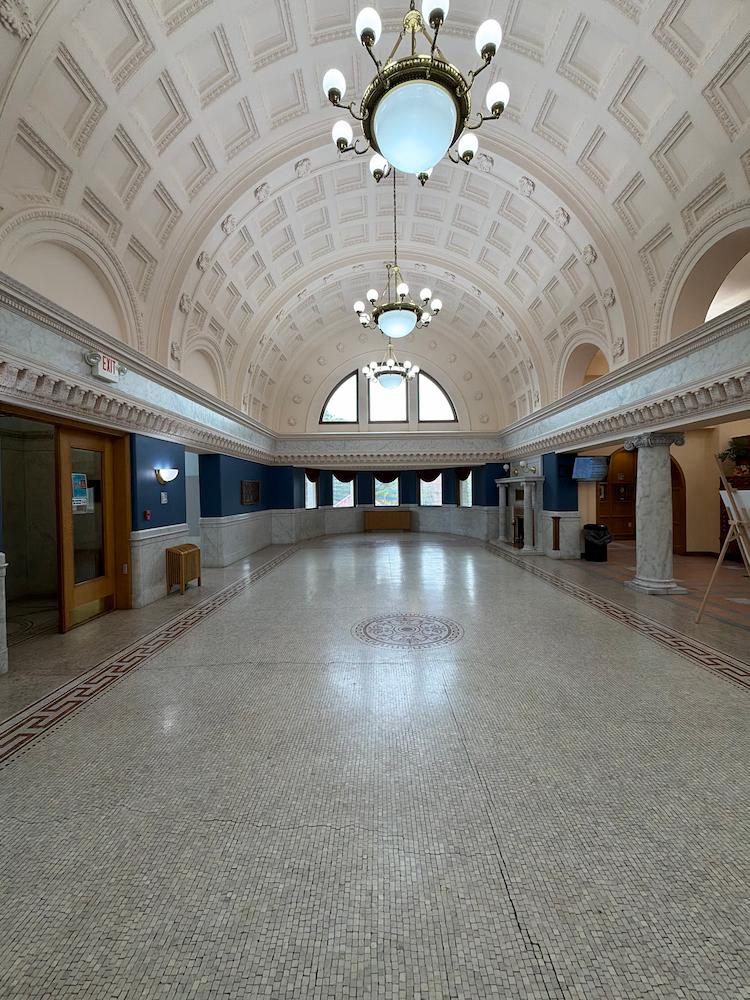
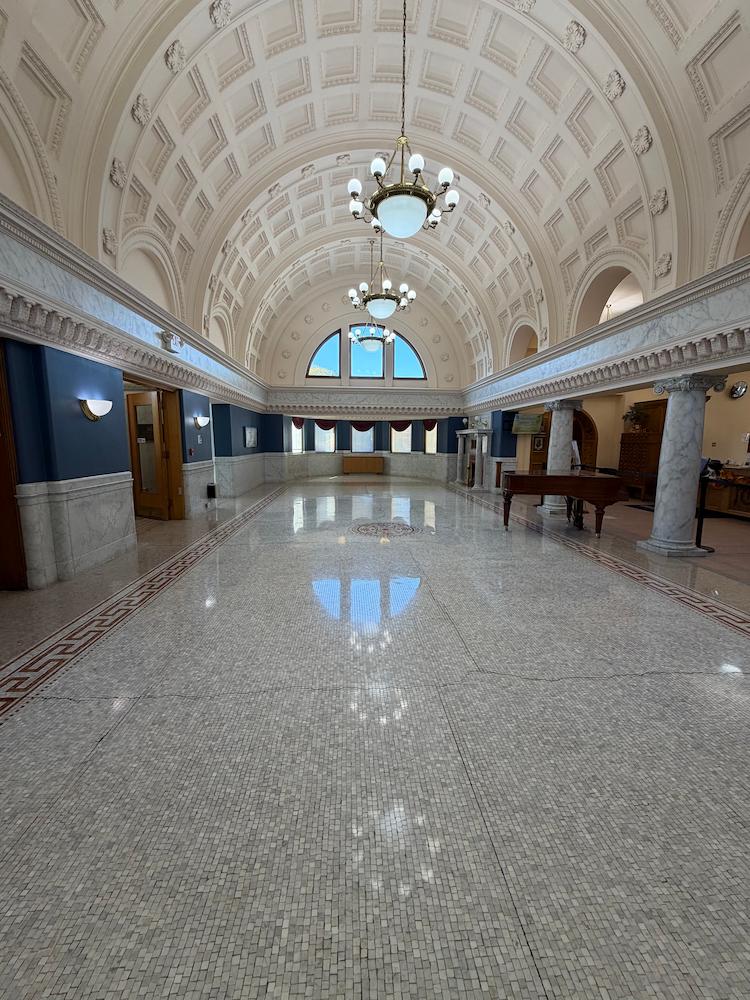
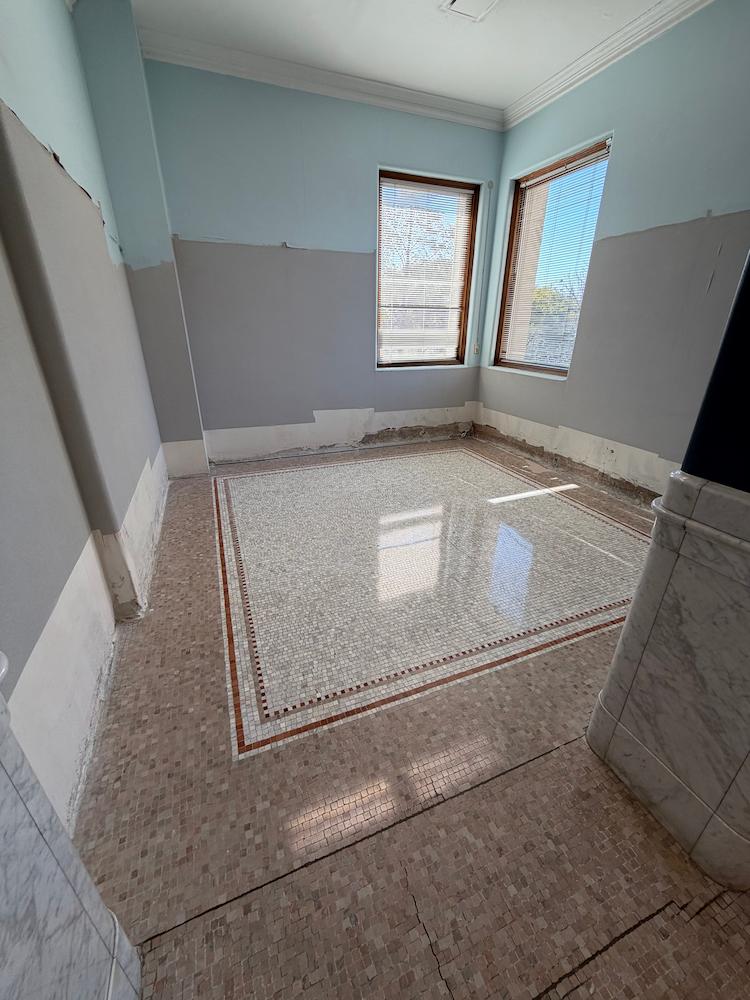
The Italian marble flooring at The Brumback Library presented an opportunity to improve the appearance of the stone while honoring its historic character.
The library’s vision was clear: significantly improve the marble’s polish and shine without eliminating the historic cracks and natural imperfections that help tell the building’s story.
Rather than attempting to make the floors appear newly installed, our restoration team worked to achieve a finish that complemented the building’s age, character, and architectural significance.
Midwest Floor Restore utilized a multistep natural stone restoration process designed to rejuvenate the marble surfaces while maintaining their distinctive appearance.
1. Marble Grinding
Our technicians performed mechanical grinding to address surface wear, imperfections, and inconsistencies in the marble flooring.
This critical step helped prepare the stone for subsequent restoration, creating a more uniform surface while retaining the character of the historic material.
2. Marble Honing
Following grinding, the marble was progressively honed to refine its surface and reduce visible scratches and wear.
Honing is an essential part of professional marble floor restoration, helping produce a consistent foundation for achieving a renewed polished finish.
3. Marble Polishing
With the stone properly prepared, our team polished the Italian marble to significantly enhance its natural beauty, reflectivity, and shine.
The transformation brought renewed life to the historic flooring, allowing the marble’s natural color, veining, and character to become more prominent.
4. Clear Epoxy Crack Repair and Pit Filling
One of the most distinctive aspects of this project involved addressing cracks and pits without erasing the visual history of the floors.
Our team utilized clear epoxy to fill selected cracks and surface imperfections, including pits in the marble.
The use of clear epoxy helped address these imperfections while allowing the historic cracks to remain visually recognizable.
This approach was especially important because the library wanted to honor the floor’s history rather than conceal every indication of its age.
5. Marble Vitrification and Crystallization
The final restoration process included vitrification, also known as marble crystallization.
This specialized stone-finishing treatment creates a chemical reaction at the marble’s surface, enhancing its polish and producing a more refined, reflective finish.
By combining traditional mechanical marble restoration methods with vitrification, our technicians were able to deliver a substantial improvement in the appearance and shine of the stone while respecting the library’s preservation goals.
Perhaps the most meaningful aspect of this historic marble restoration project was the decision not to erase every imperfection.
In many commercial marble restoration projects, the objective is to create the most uniform appearance possible. Historic preservation often requires a different philosophy.
The cracks within The Brumback Library’s marble floors represent part of the building’s history. They reflect the passage of time and the countless visitors who have walked through its halls.
The library recognized the importance of maintaining this character.
Our responsibility was to balance the practical benefits of stone restoration with respect for the building’s historical identity.
By selectively repairing cracks with clear epoxy, filling pits, and restoring the surrounding marble, we helped enhance the floors without sacrificing the historic features the library wished to preserve.
The finished result was not intended to make 125-year-old history disappear. It was intended to let that history shine.
The completed Italian marble restoration significantly improved the polish, shine, and overall appearance of the library’s historic flooring.
Through grinding, honing, polishing, selective epoxy repairs, and vitrification, Midwest Floor Restore helped revitalize the stone surfaces while maintaining the character that makes The Brumback Library unique.
The project demonstrates how specialized historic stone restoration can balance aesthetics, ongoing facility needs, and preservation priorities.
For an institution with such an important place in American history, that balance matters.
The Brumback Library is more than a public building. It is a testament to a community’s dedication to education, philanthropy, and the preservation of shared history.
Midwest Floor Restore is proud to have contributed to the continued care of this remarkable landmark.
Historic buildings require an approach to floor restoration that recognizes the value of their existing materials.
Whether restoring marble in a century-old library, terrazzo in a historic courthouse, or natural stone floors in a landmark institutional building, the goal should be to improve the surface while respecting the property’s architectural significance.
Midwest Floor Restore provides professional marble restoration, terrazzo restoration, natural stone polishing, crack repair, and specialty floor restoration services throughout Ohio, Indiana, and Kentucky.
We work with commercial facilities, historic properties, educational institutions, government buildings, and other organizations seeking to preserve and maintain their existing floors.
Our services include:
Preserve the Past. Restore the Beauty. Protect the Future.
If your historic building has marble, terrazzo, or natural stone flooring in need of professional restoration, contact Midwest Floor Restore to discuss your project.
We would welcome the opportunity to help preserve another piece of history.
We greatly appreciate the work that Midwest Floor Restore did at Crosspoint Plaza One in Fishers. Your SaniGLAZE product allowed us to refresh our second, third, and fourth floor common restrooms without completely replacing the floor and wall tile and breaking the bank! The updated look promotes cleanliness, and our tenants are certainly happy.
The process is quick and simple and offers tons of value if you have a project with a minimal budget. I’ve since recommended the product at other facilities and will continue to do so!


